preloader
Scroll to top
Urban Parkscapes 2026

The Silent Guardians of the City

  • Tags

    Public space, Urban Design, Biodiversity, Landscape design, productive landscapes, Street design, park design, parkscapes, park connectors

Author: Manasavi Gupta

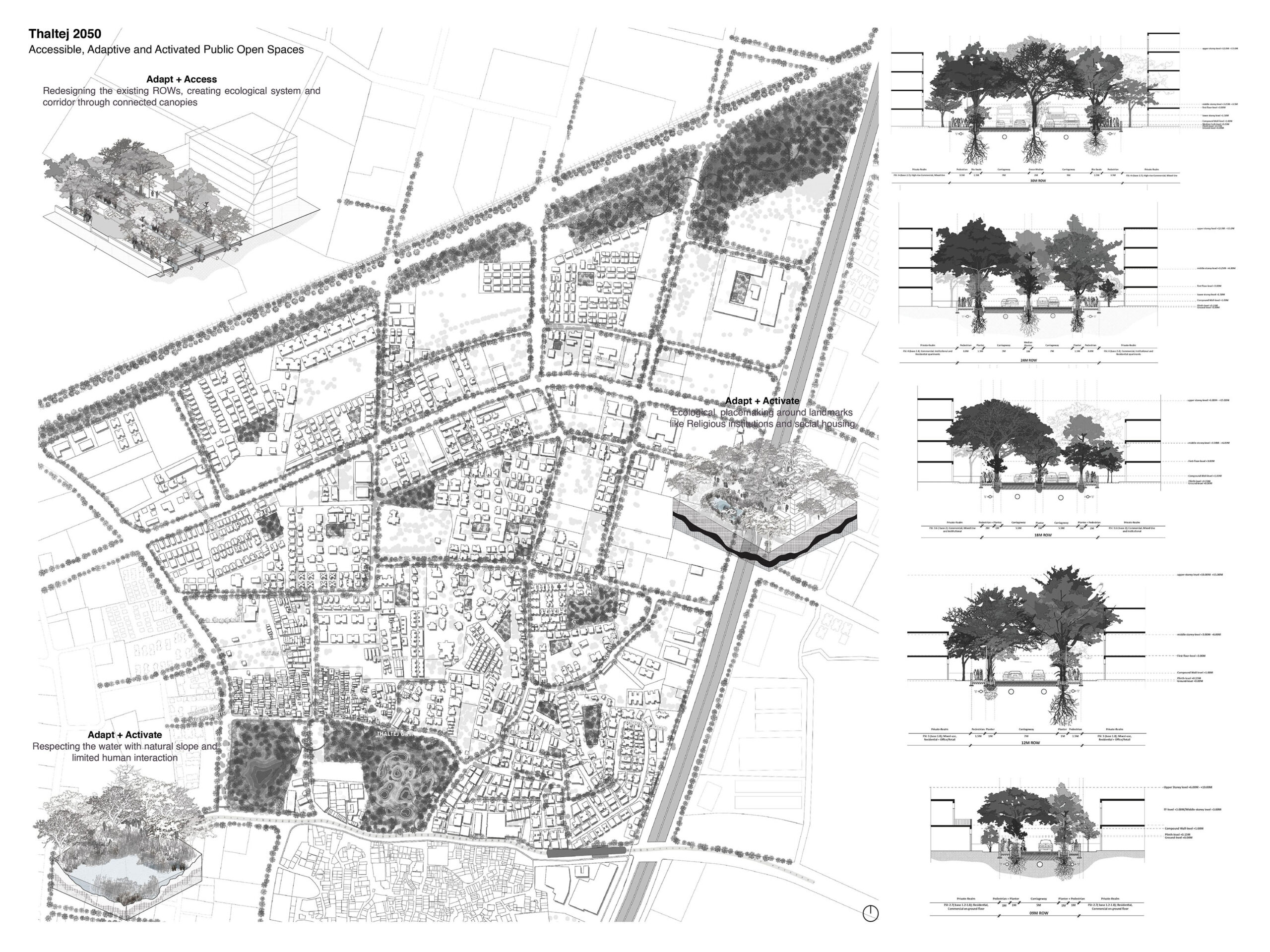
Spanning the Thaltej neighborhood in Ahmedabad, the project envisions a connected ecological network across the Town Planning scheme by transforming fragmented and underutilised plots into biodiversity pockets linked through streets acting as linear ecological corridors. In a rapidly urbanising landscape where habitat loss and heat stress continue to increase, the project positions biodiversity as critical urban infrastructure supporting pollination, cooling, soil regeneration, water retention, and ecological resilience.

The network enables the movement of bees, butterflies, birds, and insect populations across the neighborhood, allowing ecological processes to operate continuously within the city. Site responses vary across contexts- a railway edge is left relatively undisturbed to support natural succession, while other nodes combine dense native planting with active public spaces and shaded gathering areas. Together, these interconnected landscapes create a regenerative multi-species framework where human and non-human systems coexist, shaping a more resilient and ecologically responsive urban fabric.
The Silent Guardians of the City activates urban biodiversity through interconnected landscape systems
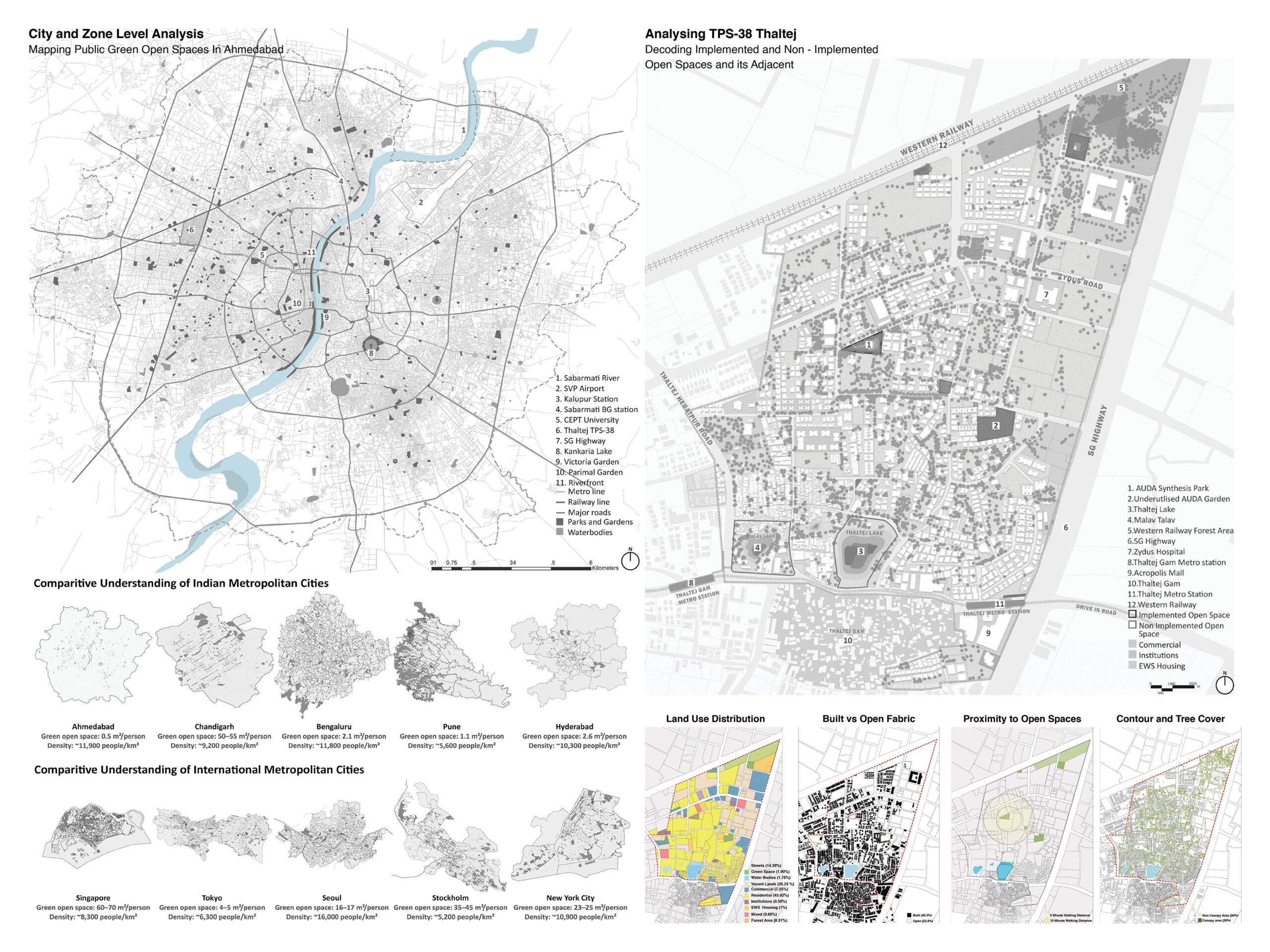
he XL and L scale analysis maps the city and TP-level green networks to understand the distribution of open spaces and ecological systems.
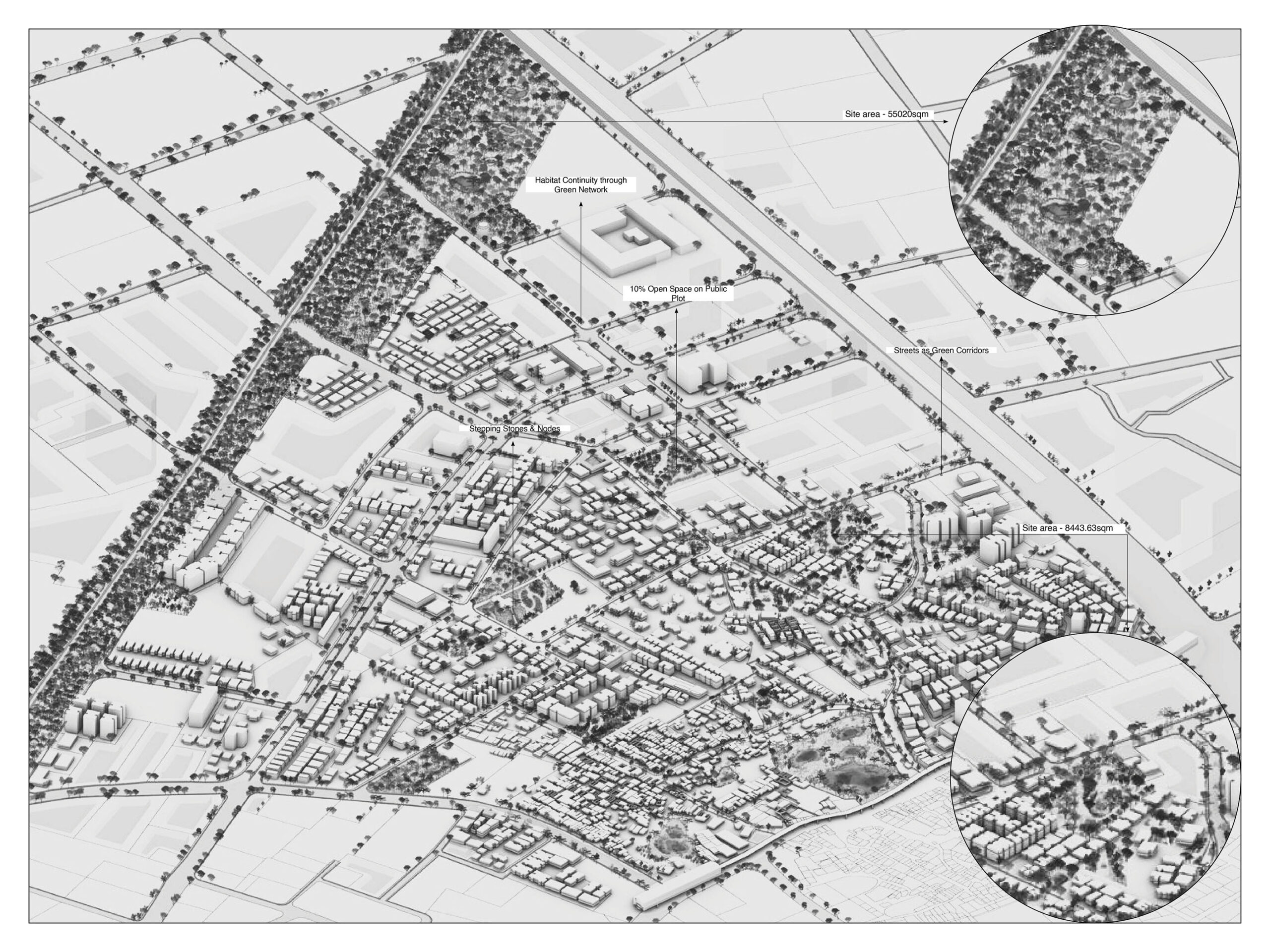
The 3D visualization zooms into the two selected sites, illustrating biodiversity networks
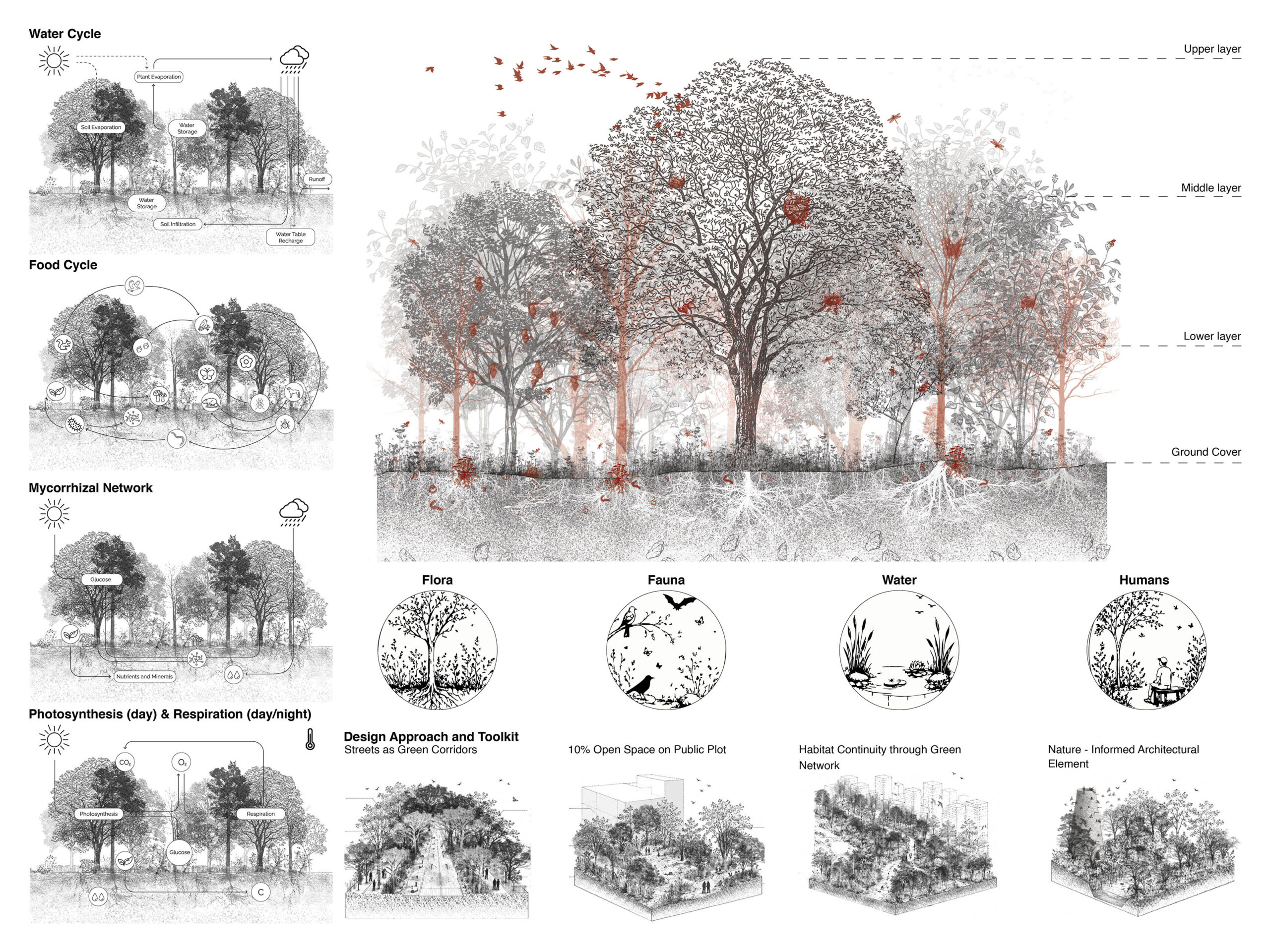
The ecological network diagrams introduce biodiversity as an interconnected system of flora, fauna, water, and human interaction guiding the site strategies.
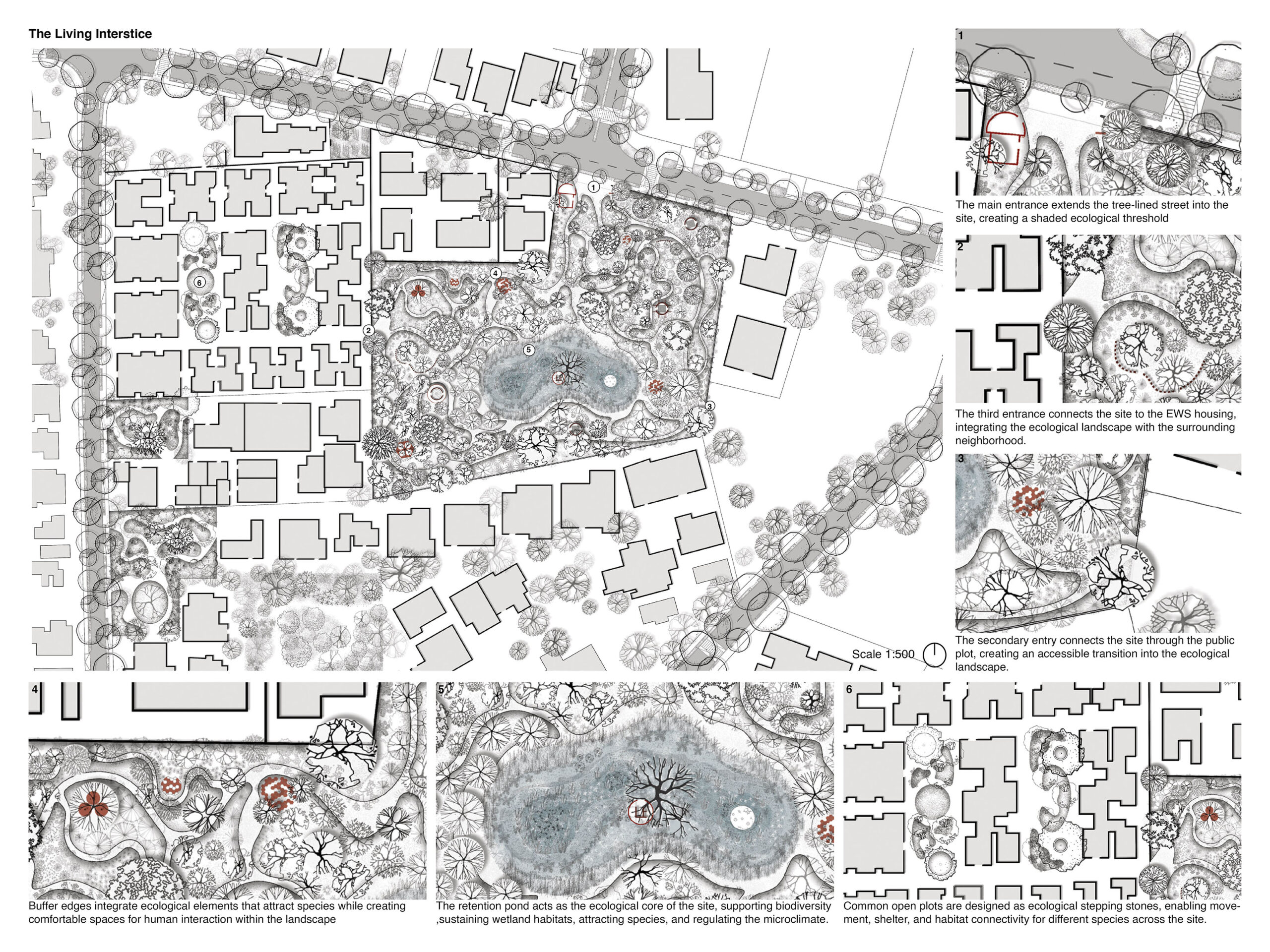
Spanning 8443.63 sqm, the site integrates wetlands, ecological buffers, and habitat corridors to create an interconnected biodiversity landscape within the urban fabric.
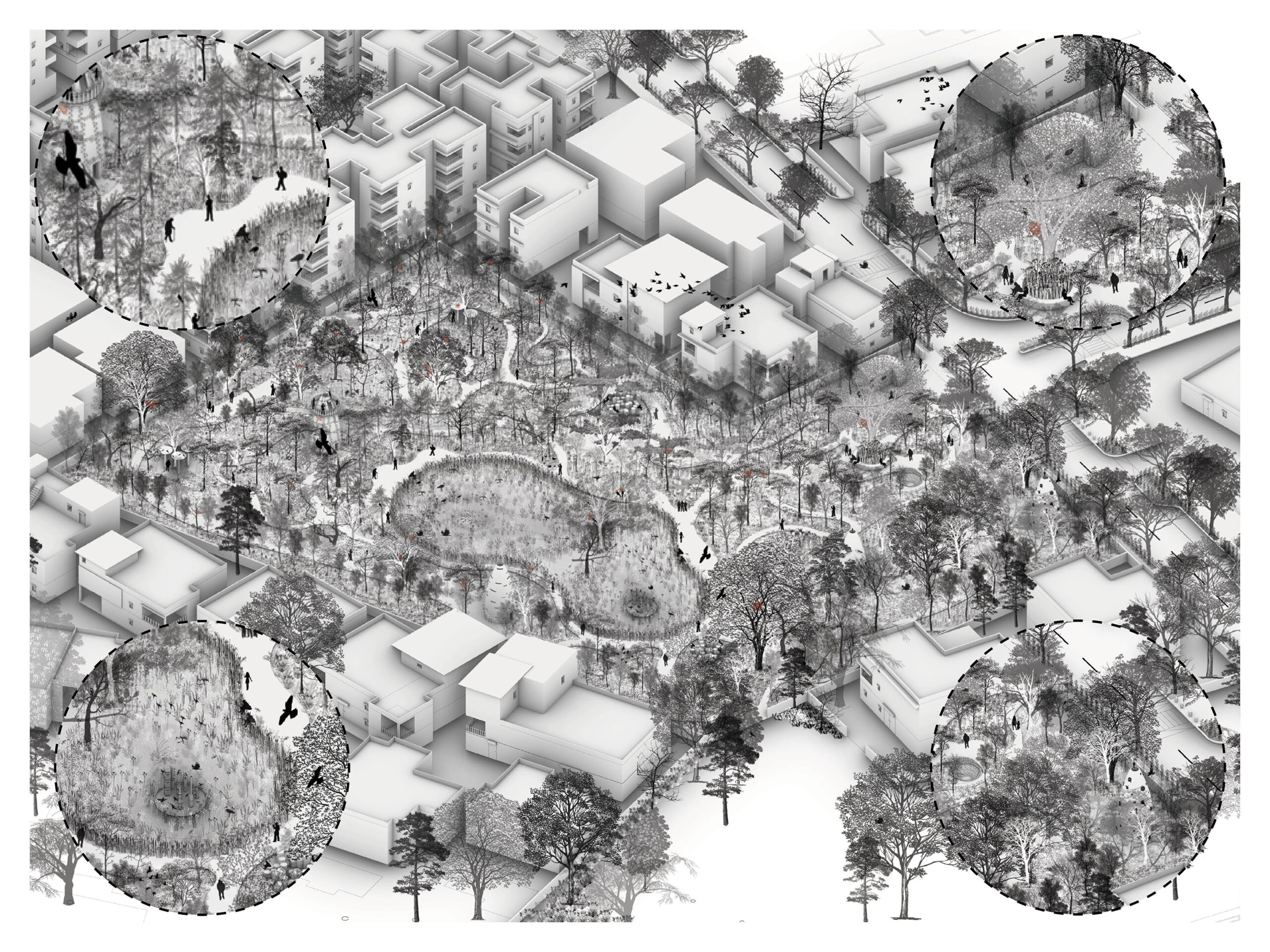
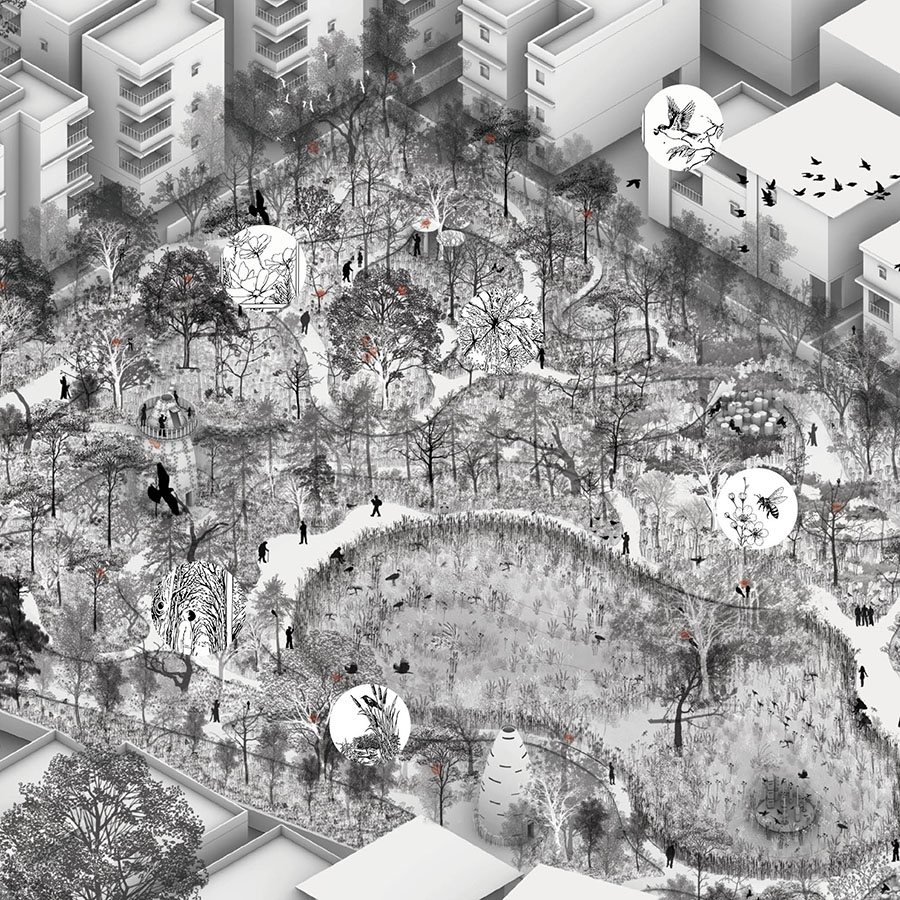
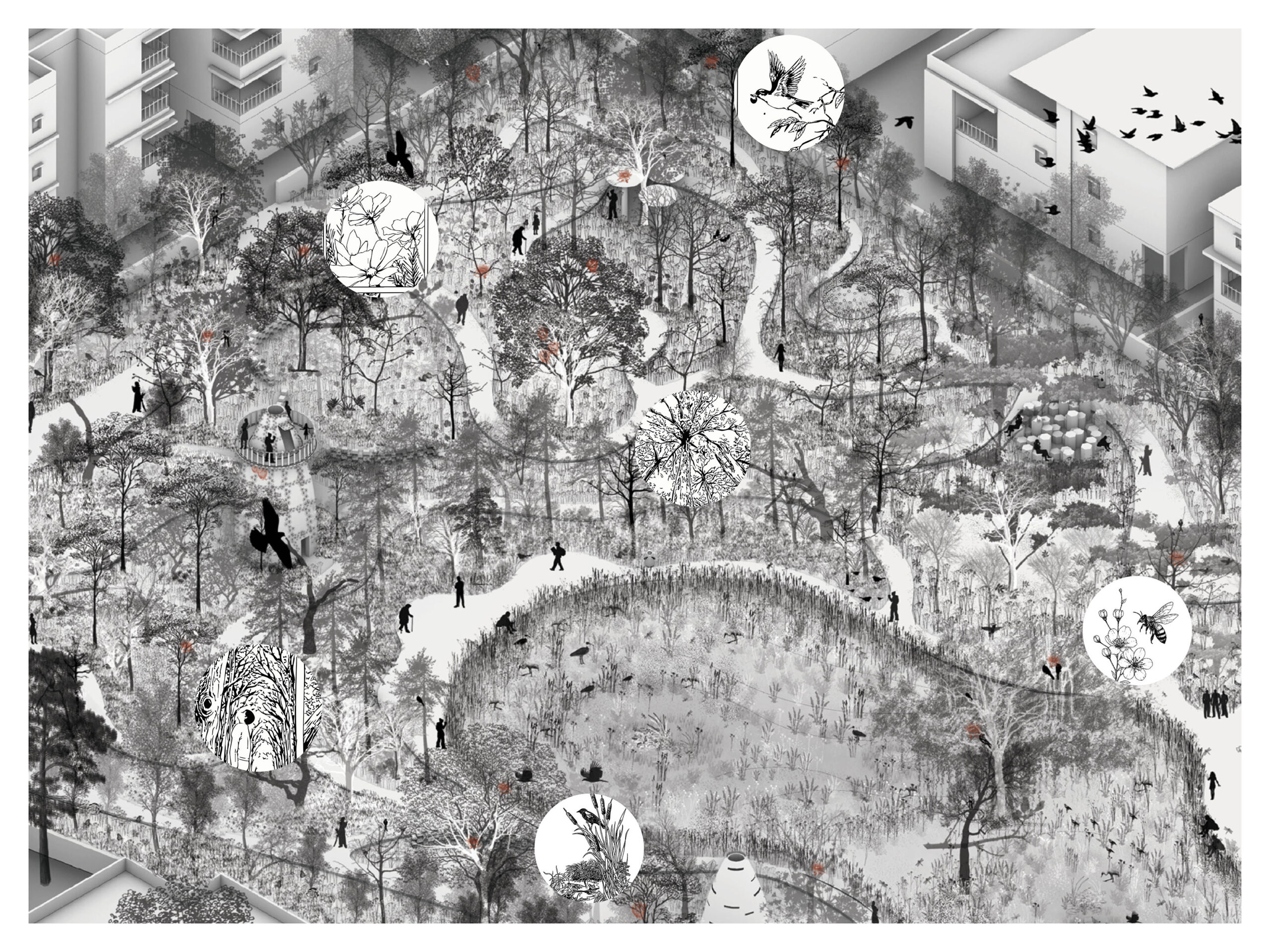
The axonometric view represents the envisioned regenerative landscape system where interconnected ecological interventions support the movement of species, activate biodiversity networks, and enable human and non-human systems to coexist within the urban fabric.
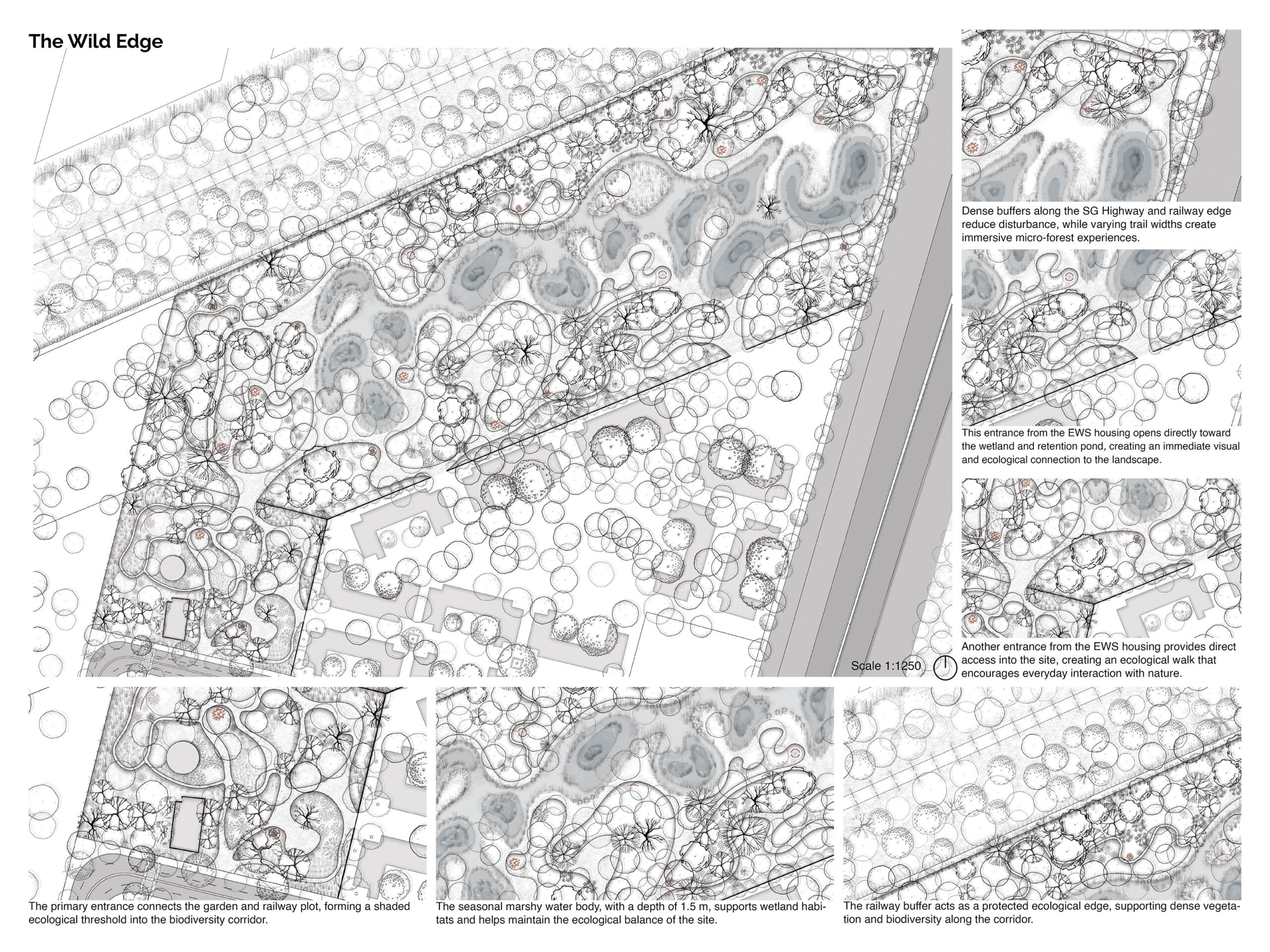
Spanning 55,020 sqm, the site transforms the railway edge into a protected ecological corridor where wetlands, dense buffers, and immersive micro-forest trails support biodiversity movement and human interaction with nature
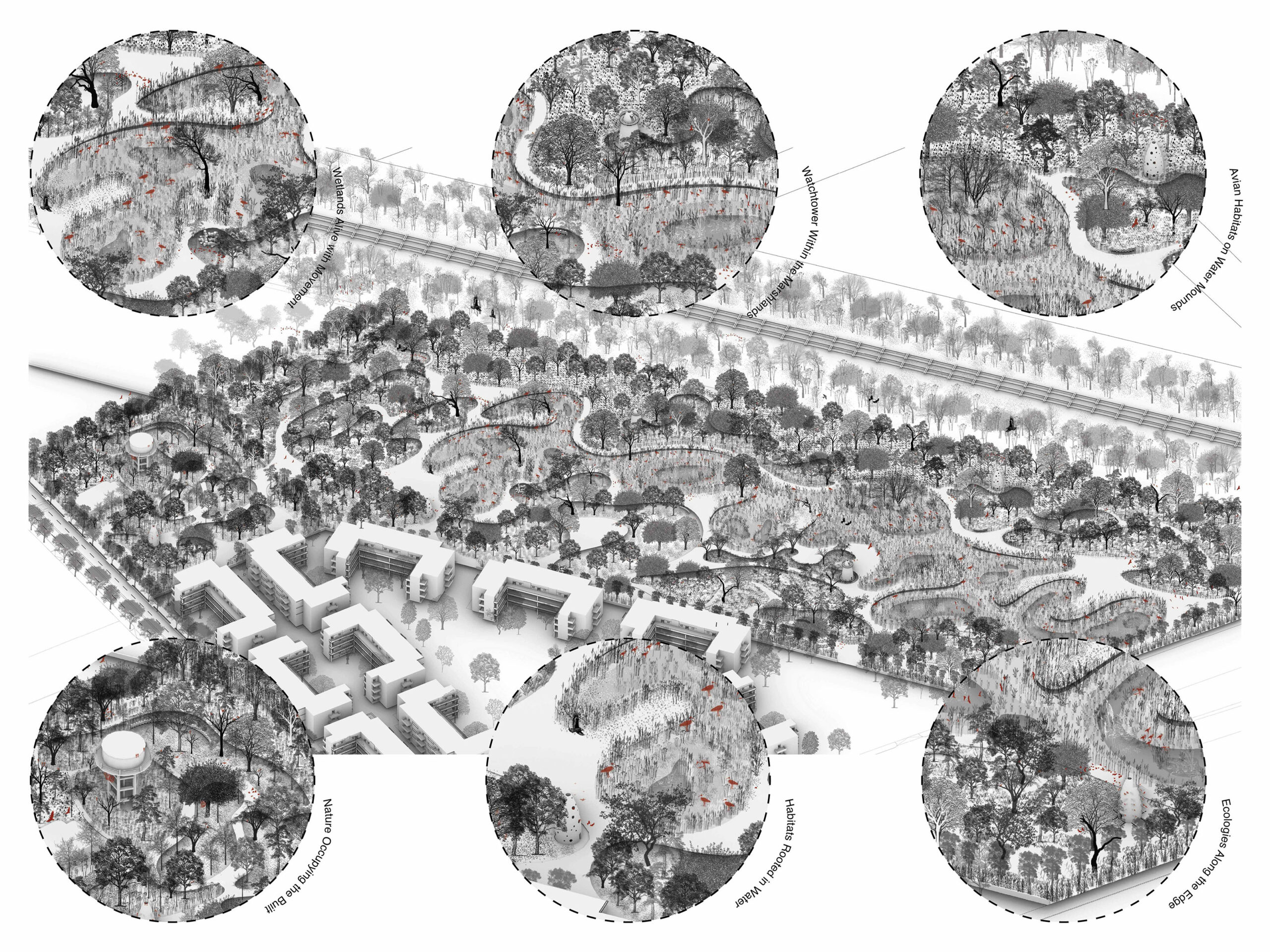
The axonometric view highlights the site’s existing ecological richness, where preserved tree networks form the primary landscape framework, while selective interventions such as wetlands, bird towers, and ecological architectural elements enhance biodiversity and species interaction.
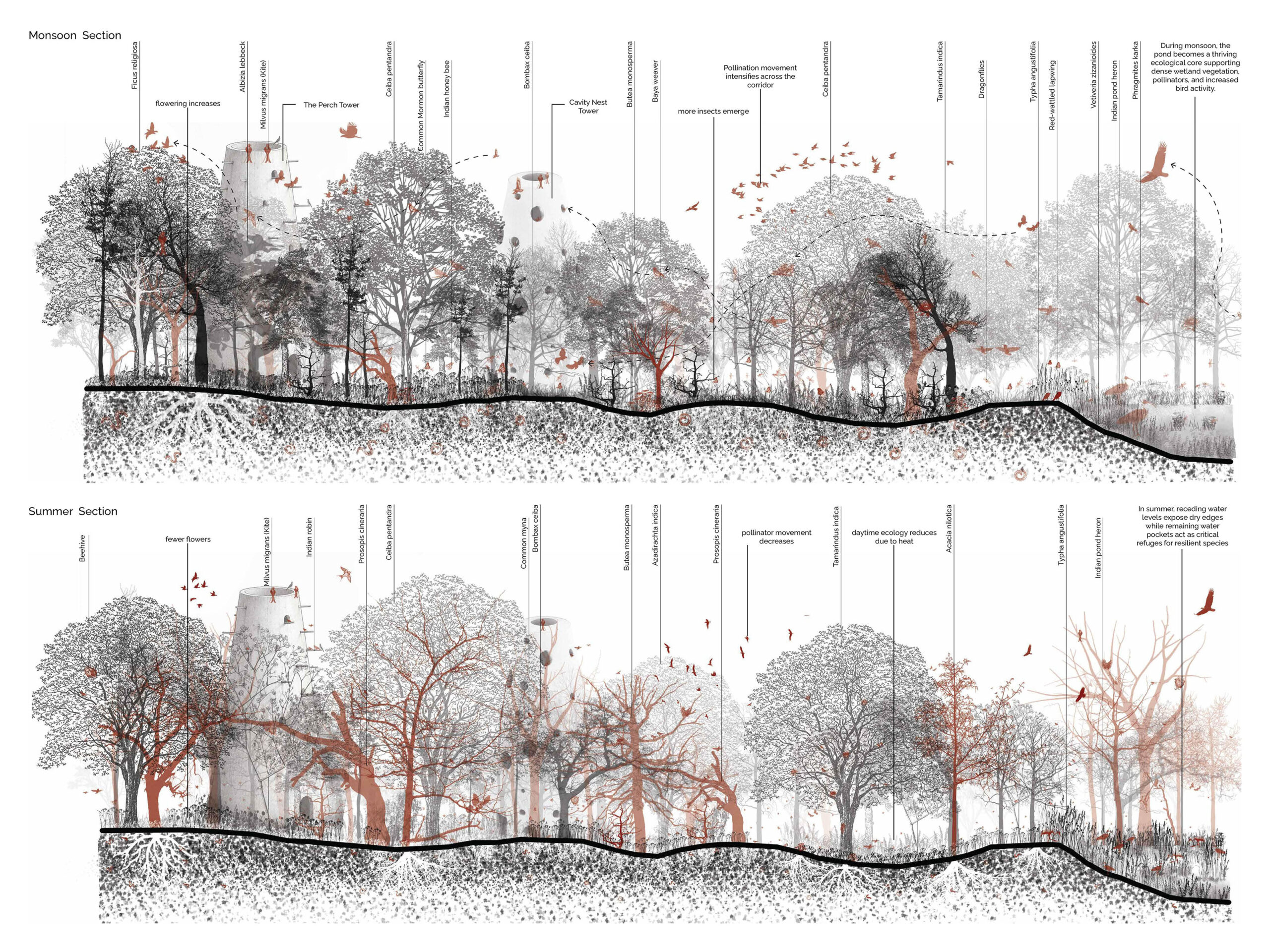
The seasonal sections illustrate how changing ecological conditions influence planting palettes, species movement, and biodiversity networks, revealing the silent guardians that activate and sustain the landscape through monsoon and summer cycles.