preloader
Scroll to top
Urban Parkscapes 2026

Sculpting water: Urban landscapes shaped by flow

  • Tags

    Public space, Urban Design, Landscape design, productive landscapes, park design, Lake design, parkscapes, sculpting lake

Author: Shubhangi Singh

SCULPT – DIVIDE – ADAPT – ACTIVATE
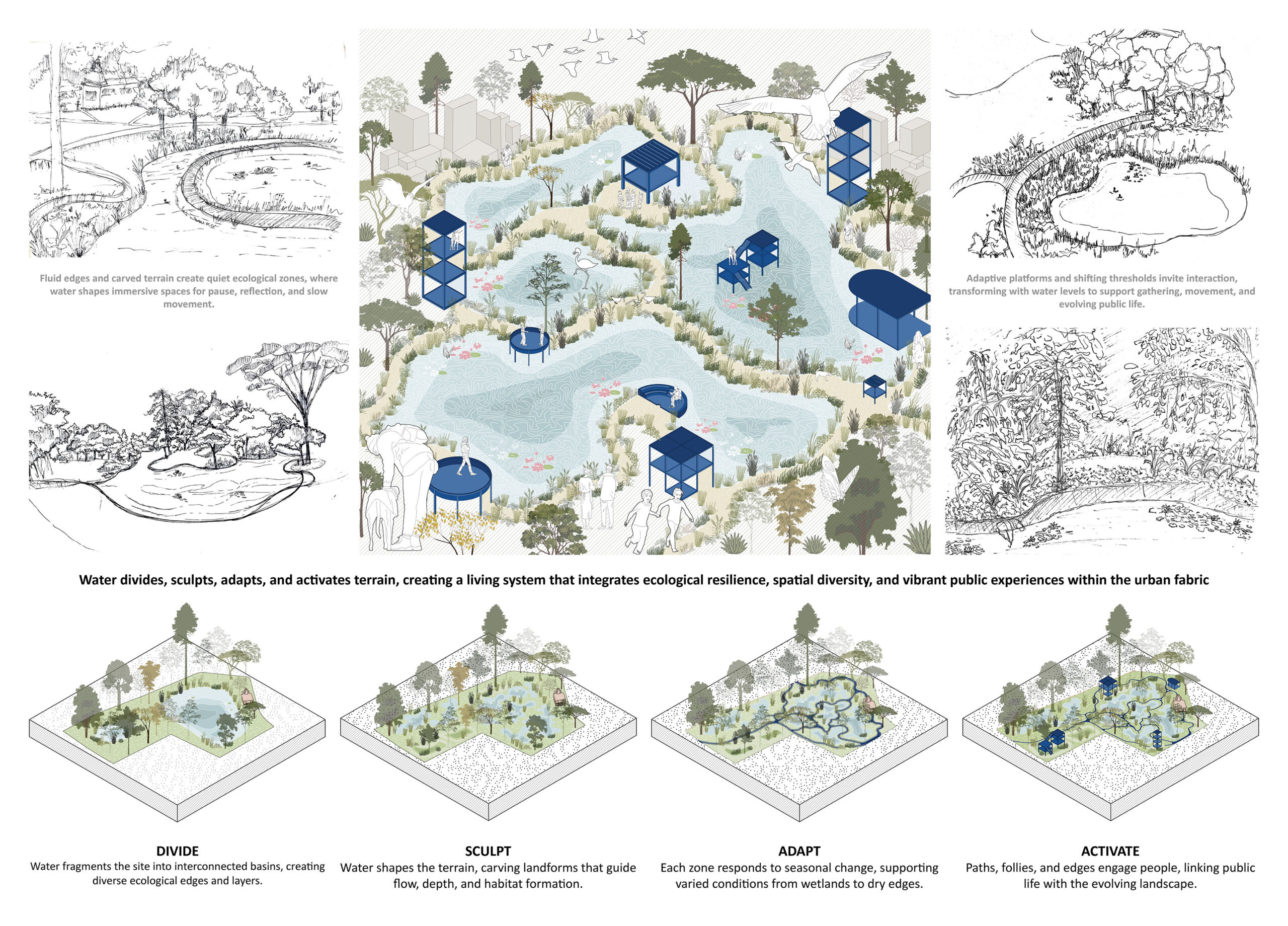
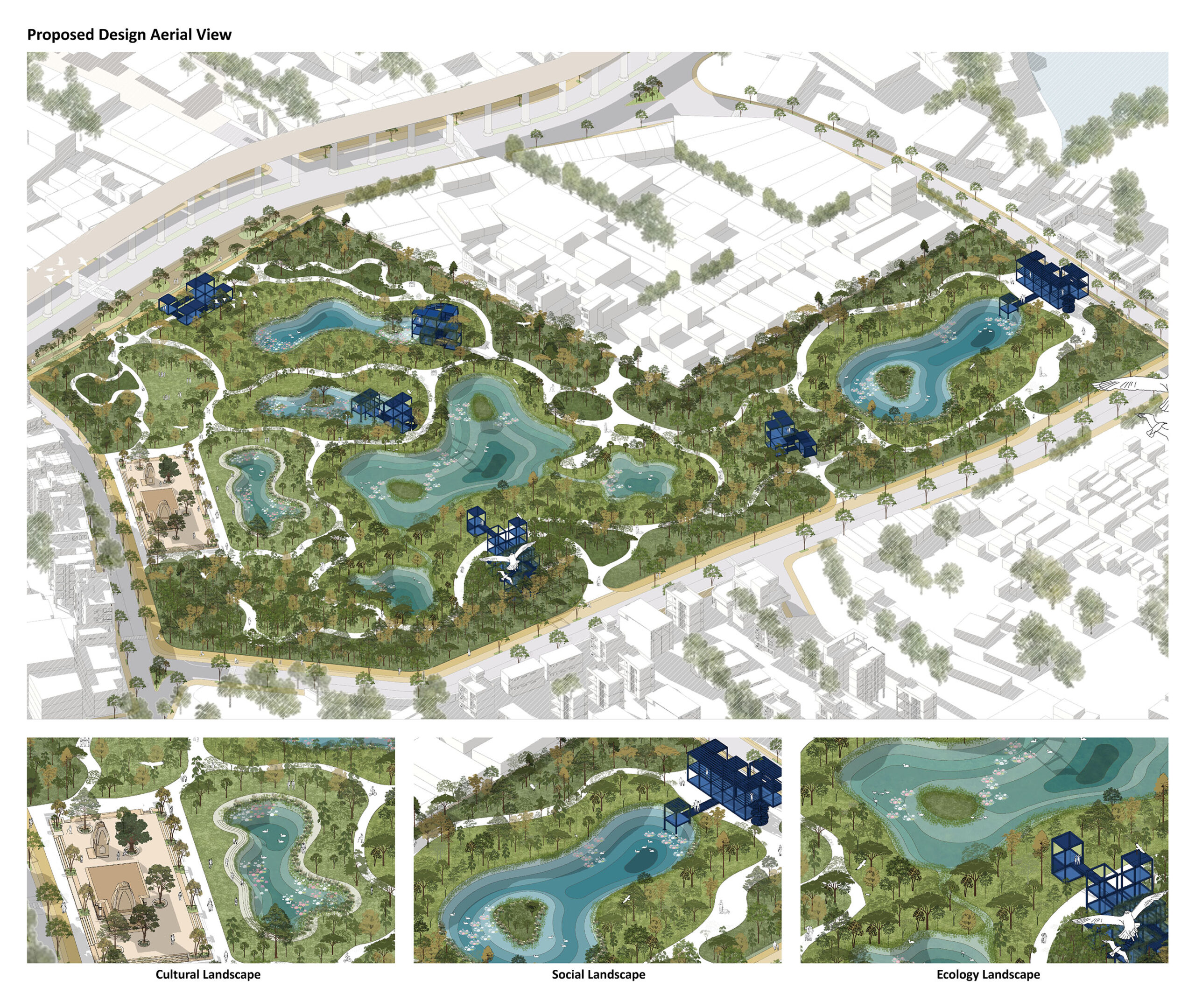
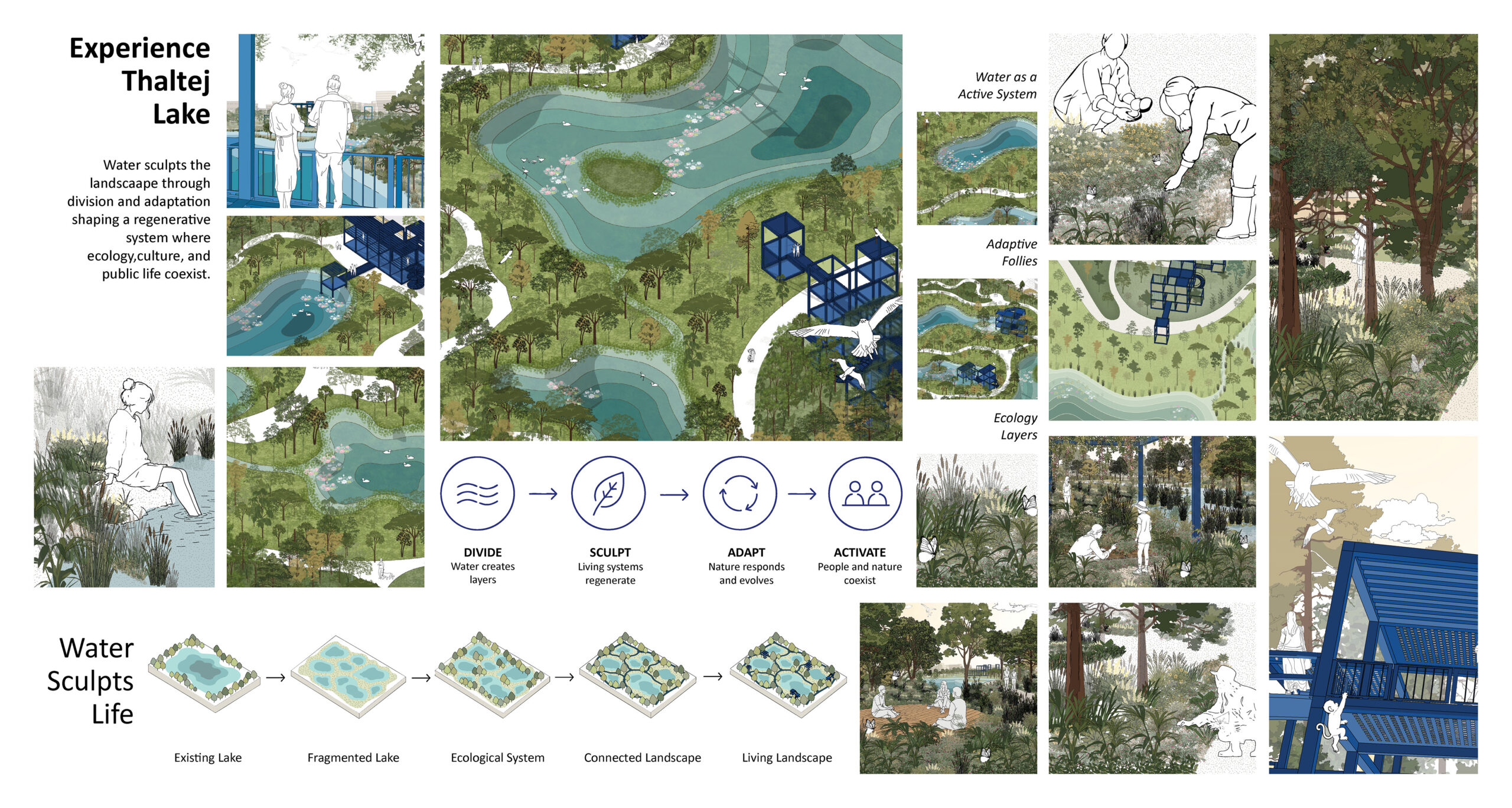
Situated along a major metro corridor in Ahmedabad, the Thaltej Lake site is reimagined as a performative landscape within a rapidly transforming urban edge, with the historic gamtal situated across the waterbody. Rather than retaining the lake as a singular static basin, the project sculpts the larger waterbody into multiple interconnected pockets, allowing water to actively divide,sculpt,adapt and activate through seasonal change. These varied water conditions create diverse ecological habitats, strengthen biodiversity, and generate shifting relationships between land and water across the site. Interwoven within this hydrological landscape are adaptive follies, public infrastructures, and spatial anchors that support gathering, pause, ritual, and everyday occupation. The edges evolve between protected ecological buffers and active cultural thresholds, responding to fluctuating water levels and changing public use over time. Through water, landscape, and infrastructure operating together, the project establishes a regenerative urban system shaped by ecology, movement, culture, and public life.
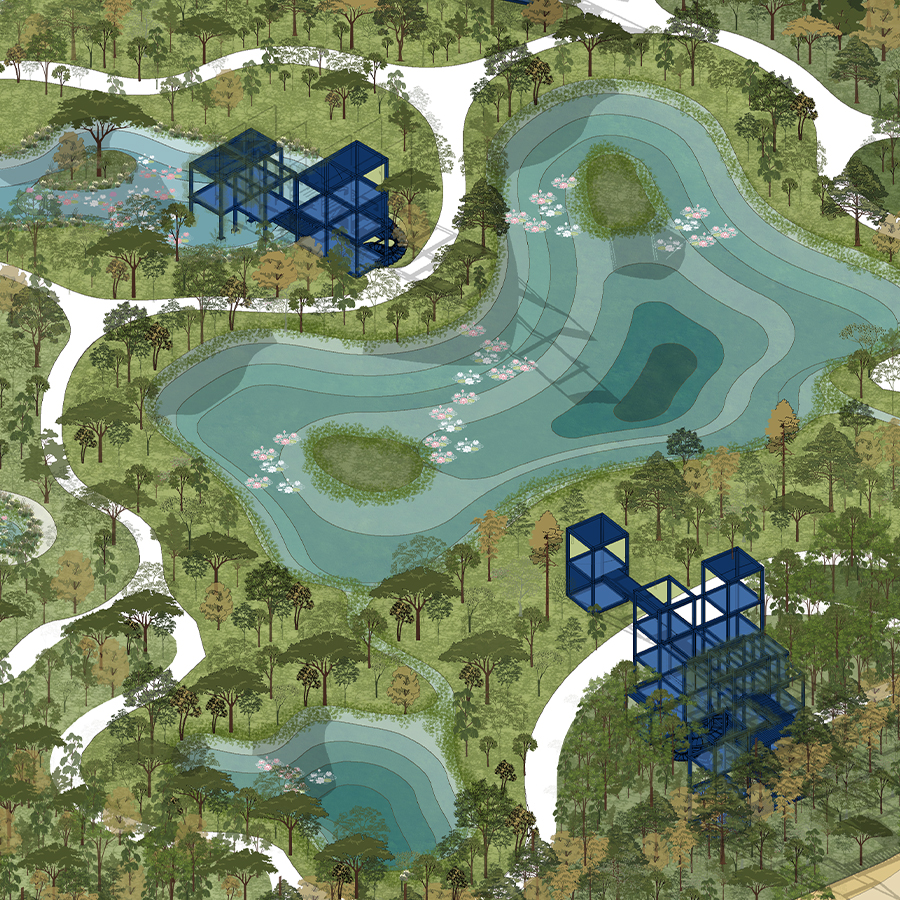
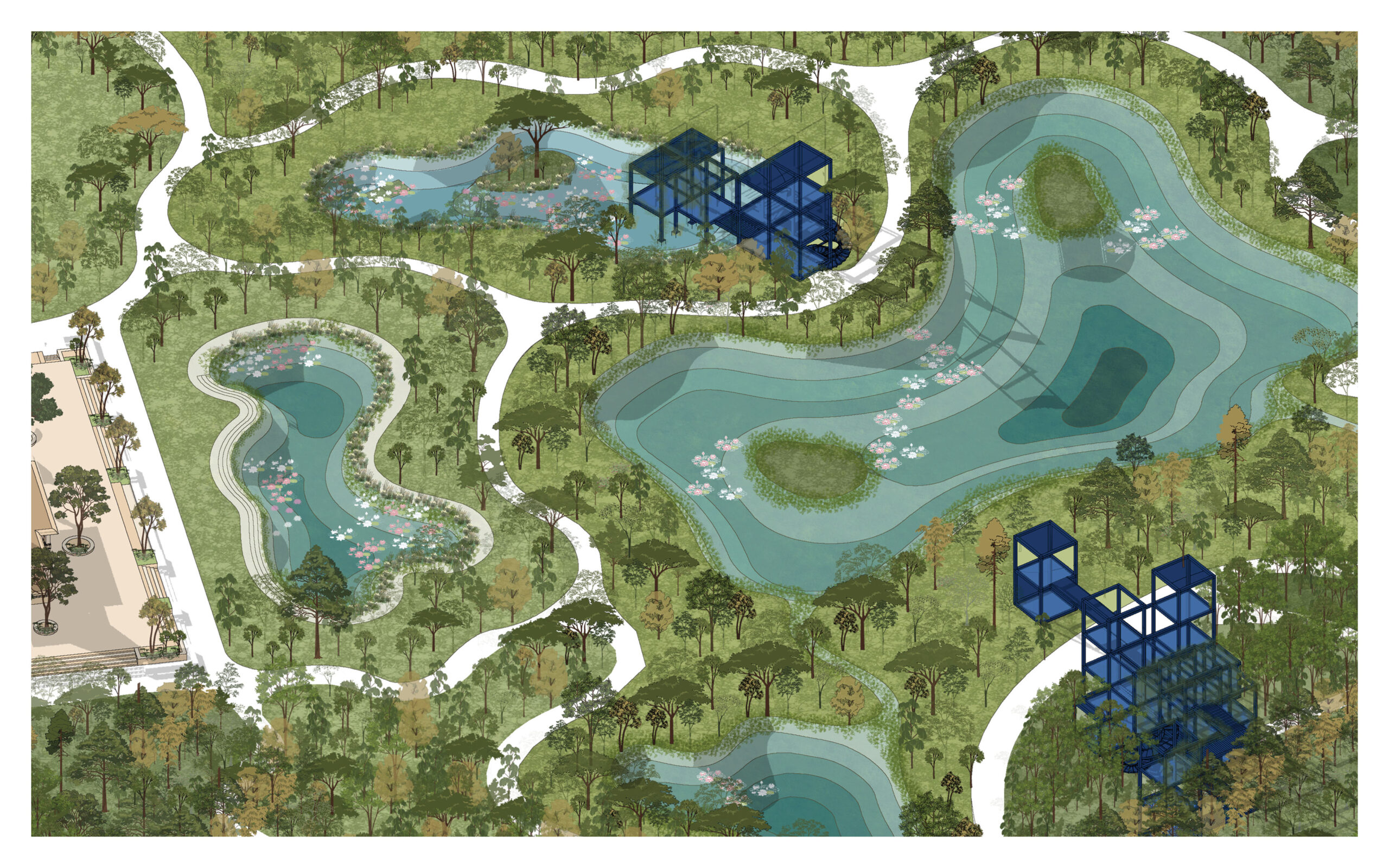
 

The landscape is designed around water to improve ecology, public experience, and connections between natural urban spaces.
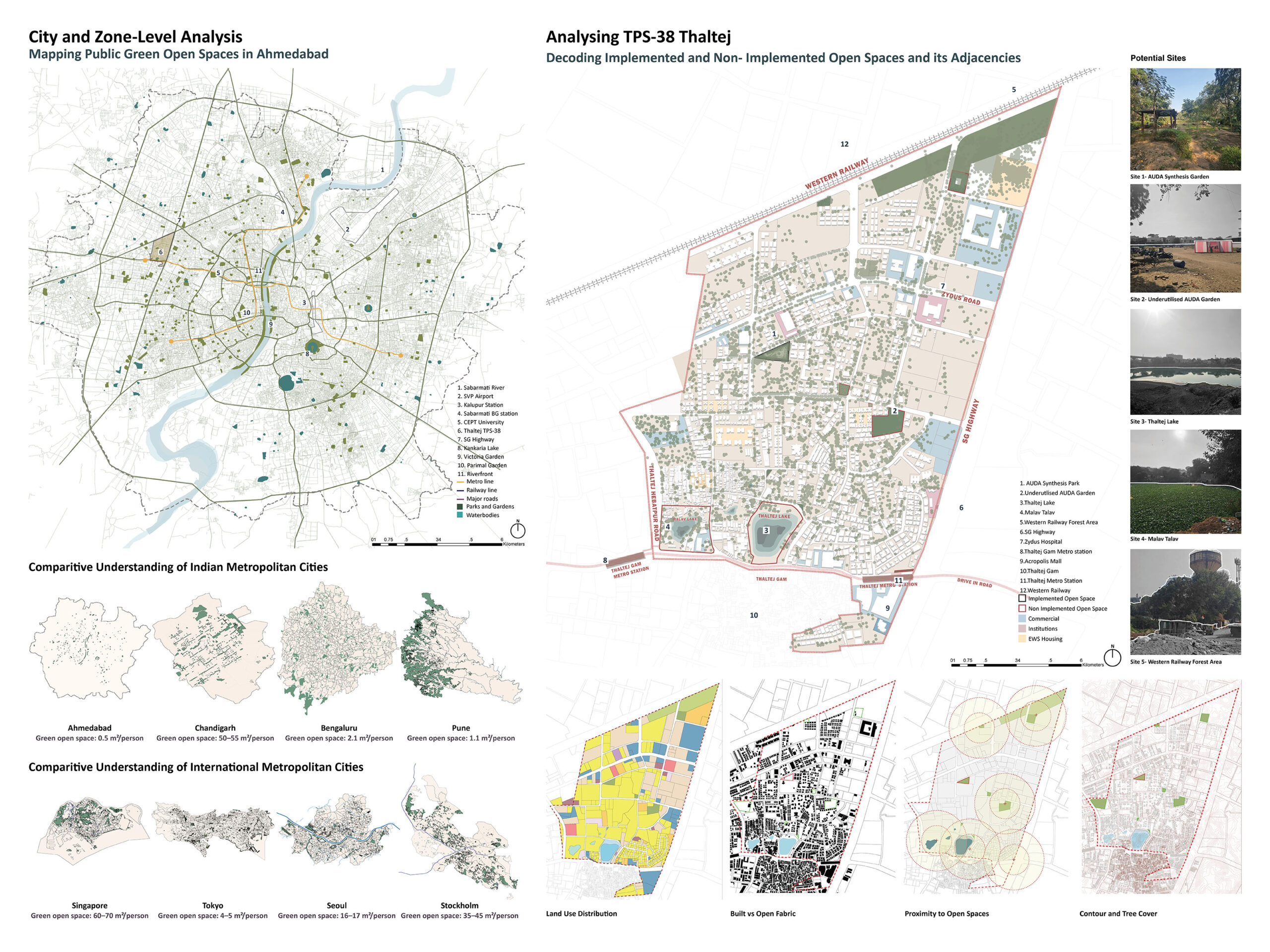
The XL and L scale analysis studies Ahmedabad and TPS-38 Thaltej to understand the distribution of green open spaces, water bodies, and ecological networks. It identifies implemented and underutilized public spaces, their accessibility, surrounding urban fabric, and potential connections to strengthen ecological continuity and public life across the urban landscape.
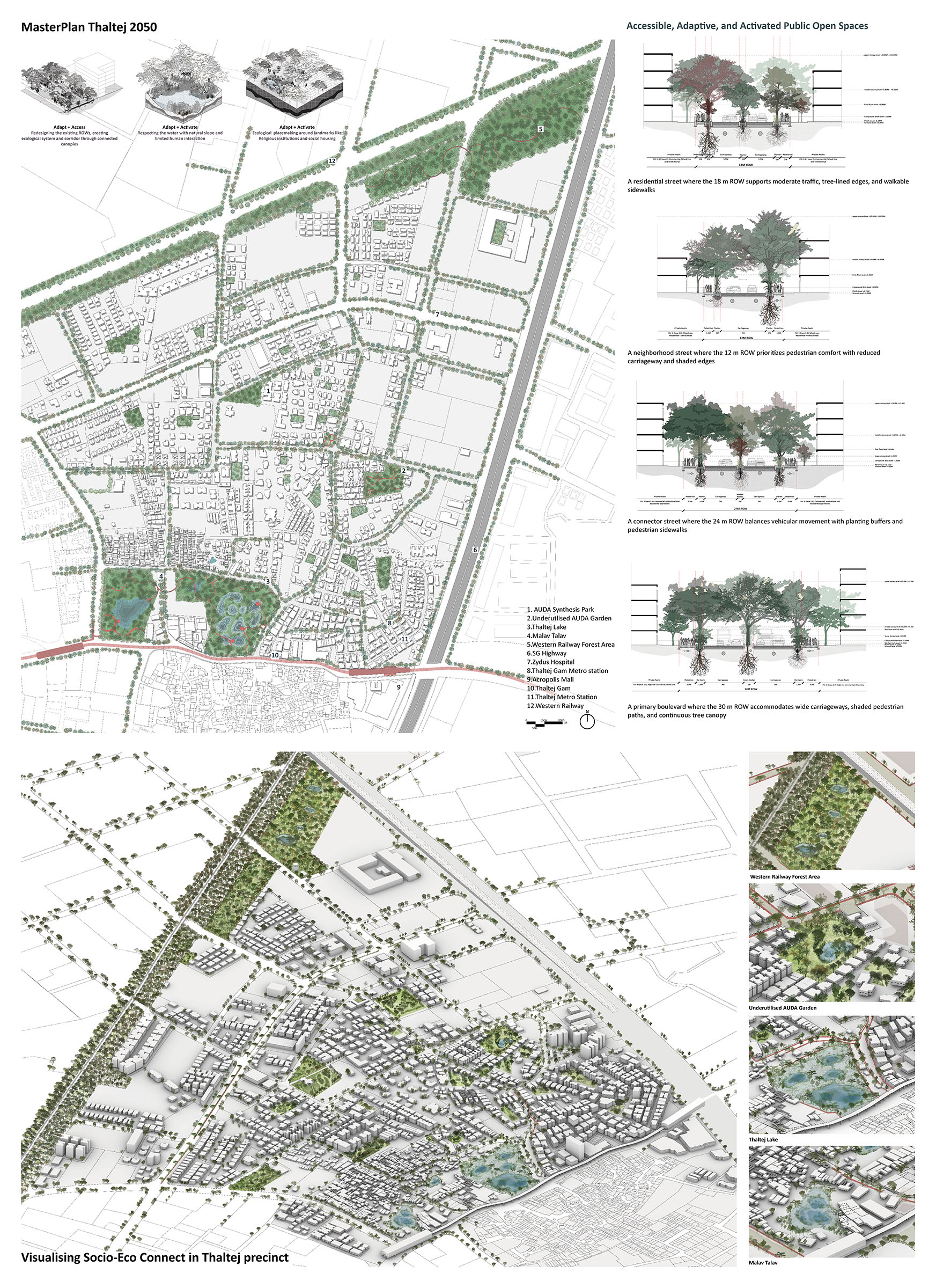
The L-scale masterplan reimagines Thaltej’s green and blue networks by connecting lakes, gardens, streets, and ecological corridors. Through adaptive public spaces, shaded streets, and accessible open spaces, the proposal strengthens ecological continuity, pedestrian movement, biodiversity, and everyday public interaction across the urban landscape.
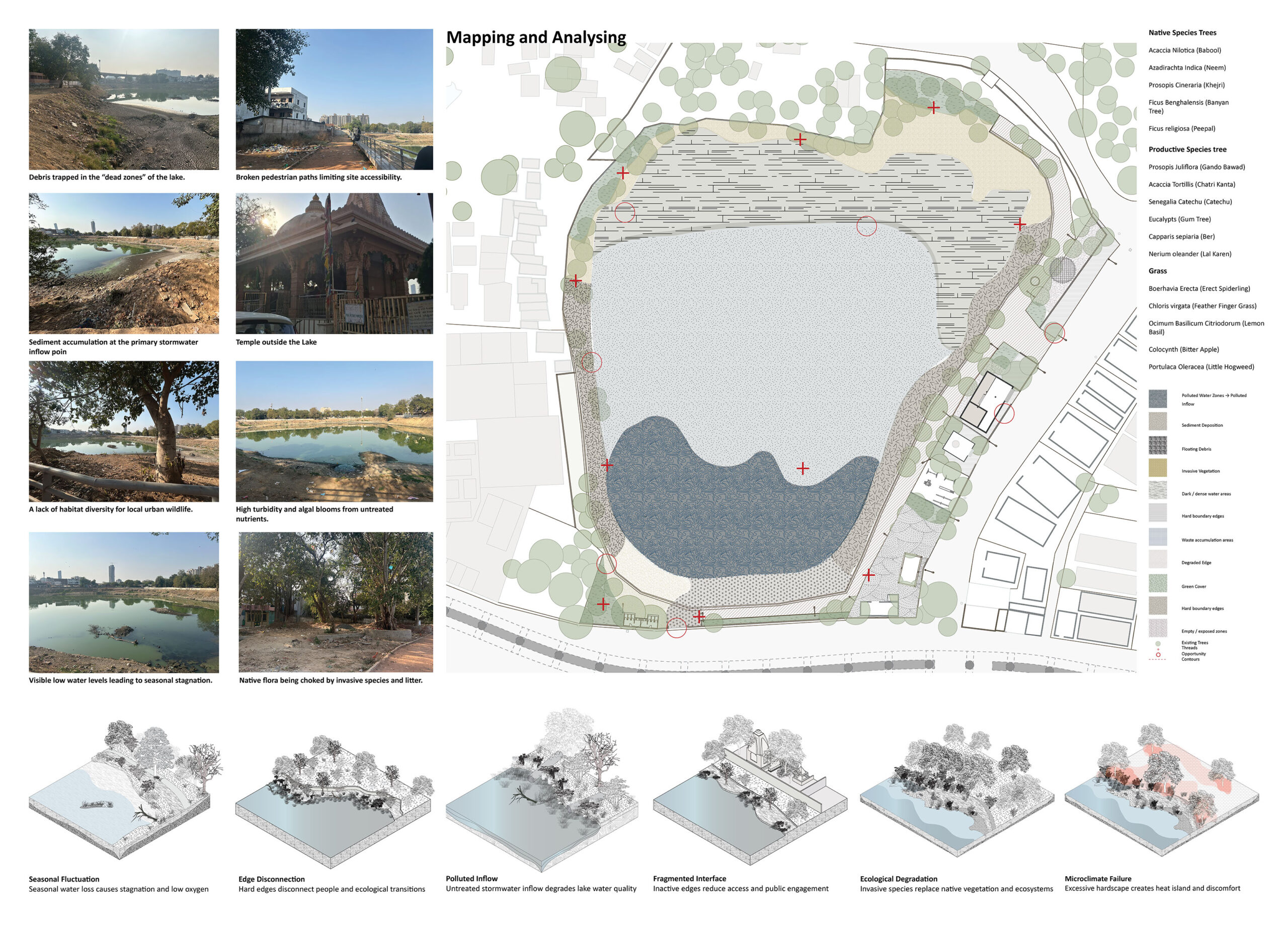
Understanding water pollution, habitat loss, and fragmented public access in Thaltej lake.
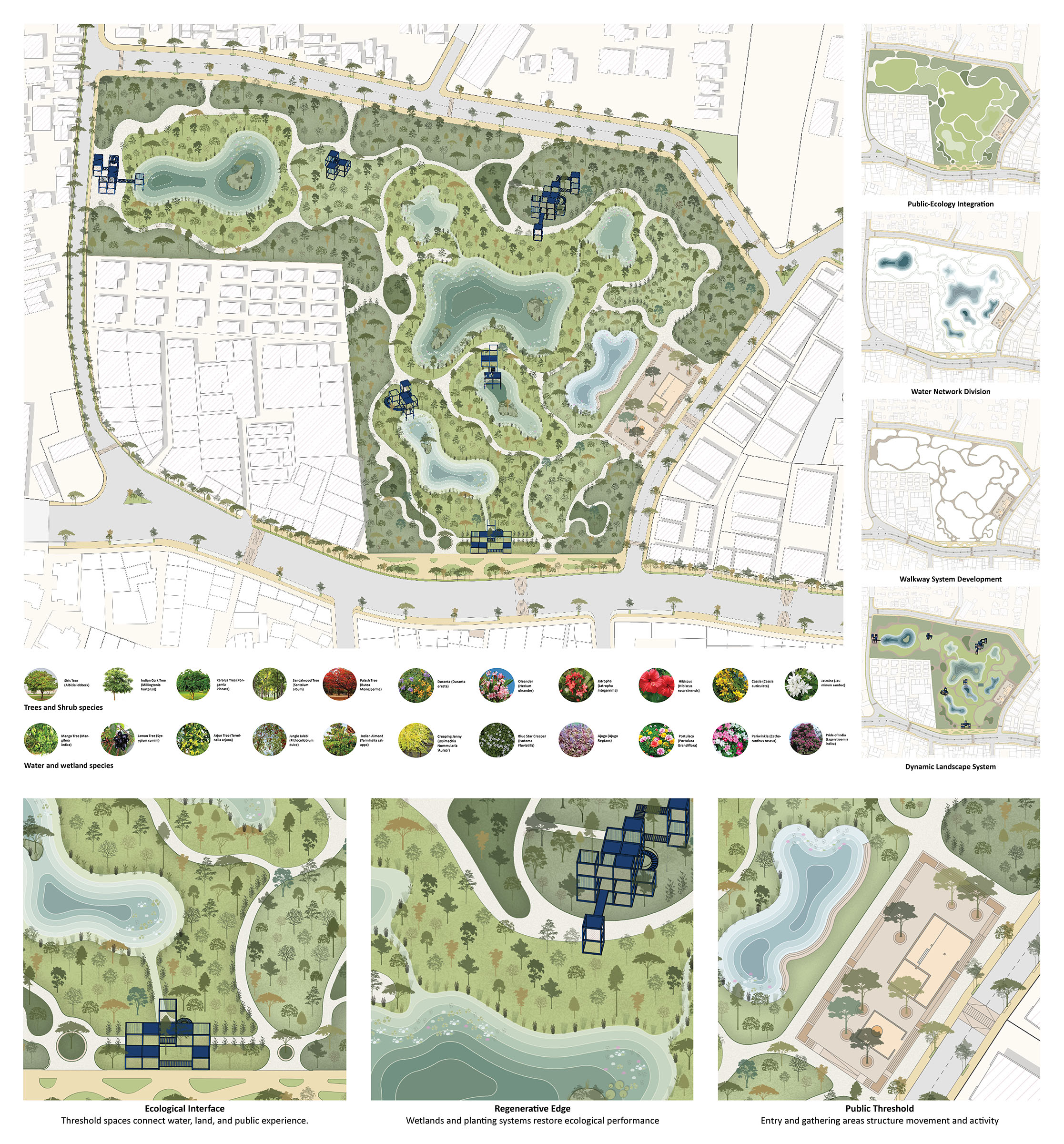
The concept integrates water, vegetation, and public life to create interconnected landscapes that evolve through time and seasons.
The plan reimagines the lake edge through adaptive ecologies, accessible public spaces, and water-sensitive landscape interventions.
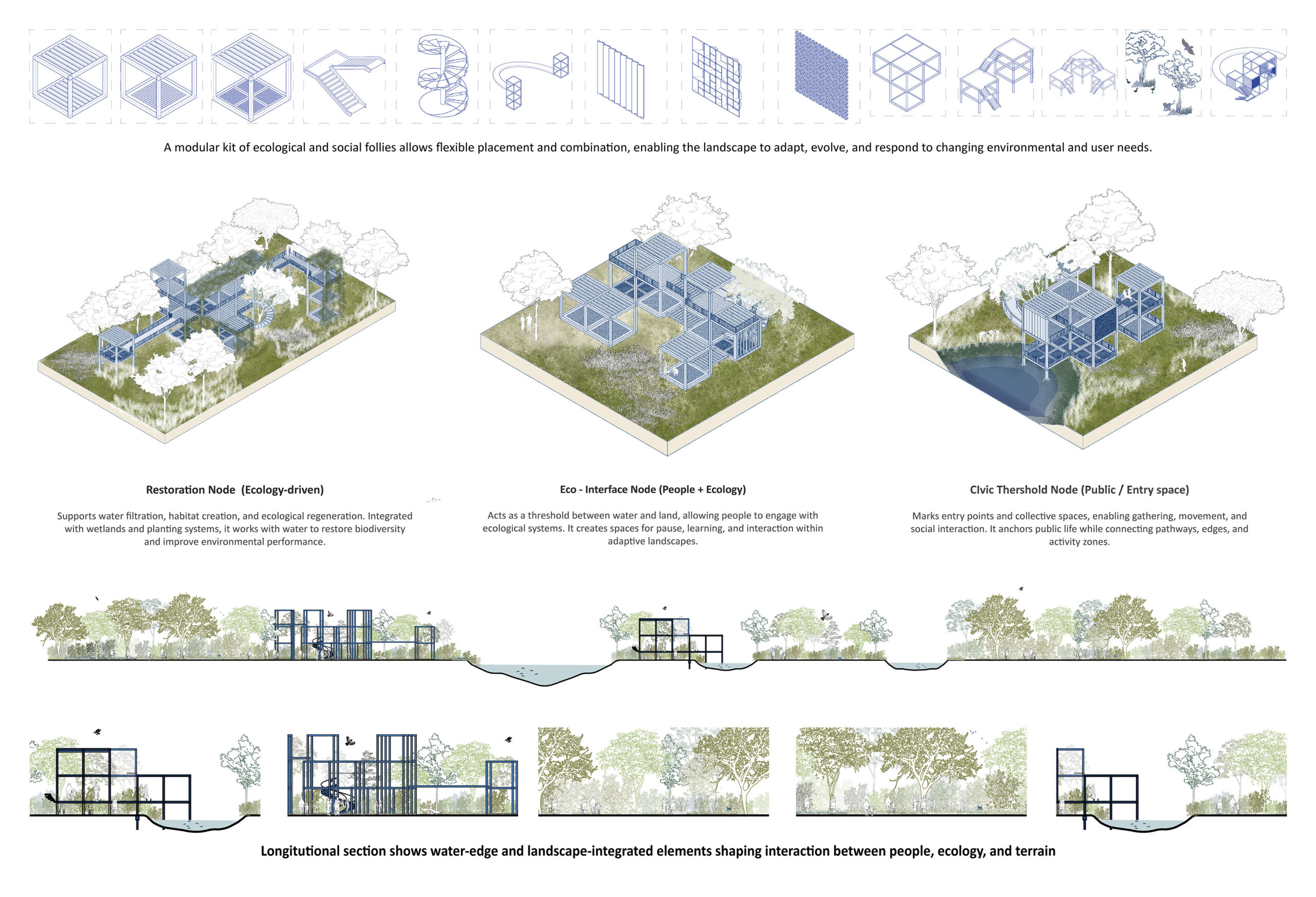
The follies function as immersive nodes that connect people with ecology through layered landscapes, shaded spaces, and water-responsive environments.
Flowing water systems, layered vegetation, and immersive pathways create a resilient parkscape connecting ecological and public experiences.
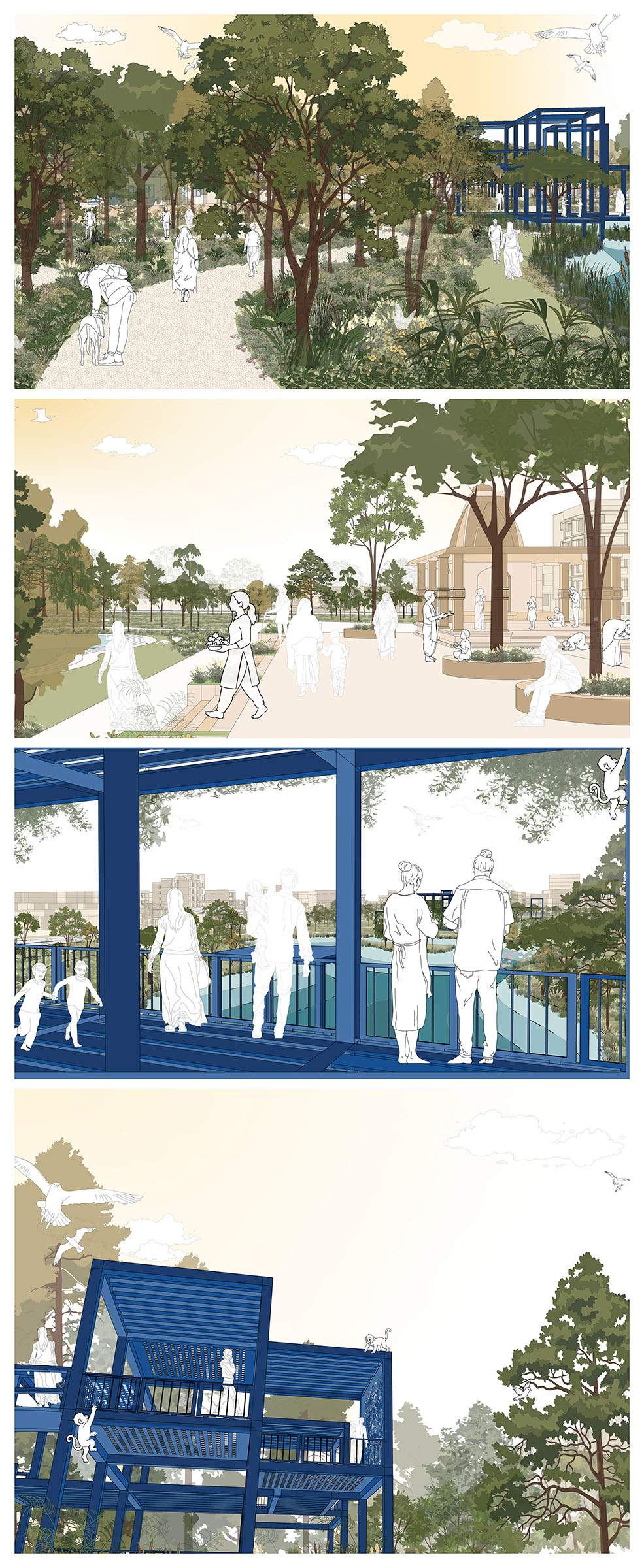
Moving through shaded trails and water edges, the storyboard reveals immersive moments of pause, exploration, gathering, and reflection. Layered ecologies, adaptive follies, and interconnected wetlands create evolving public experiences that reconnect people with water, biodiversity, and nature within the urban landscape.
A sequence of moments connecting people with water, ecology, pause, movement, and layered living systems.